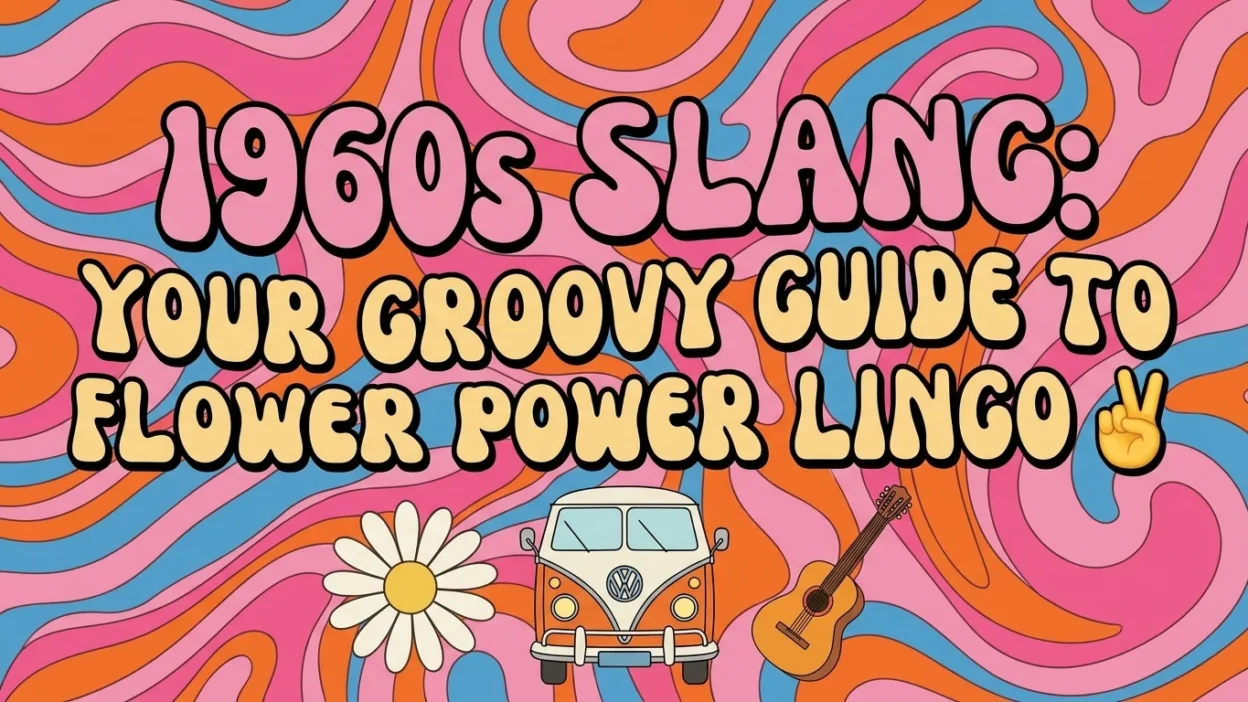
“Groovy” meant cool, “far out” meant amazing, and “bummer” meant something disappointing. If you wanted to sound hip in the 1960s, you needed to know the lingo of the counterculture, surfers, and the British Invasion.
The 1960s were a wild decade. The space race, the Vietnam War, the civil rights movement, and the rise of hippie counterculture all shaped the way people talked . Slang wasn’t just about sounding cool—it was about belonging to a tribe. Whether you were a surfer in California, a beatnik in New York, or a rock fan in London, the words you used said a lot about who you were.
Let’s dive into the most popular 1960s slang and what it all meant.
H2: The Most Iconic 1960s Slang Words
These are the words that defined the decade.
H3: Groovy
Groovy was the ultimate 1960s word. It meant cool, awesome, or excellent . You’d hear it everywhere—from hippies to surfers to TV shows.
The word actually started in the jazz scene decades earlier, but the 60s made it famous . Today, it’s the word everyone associates with the decade, thanks to movies and pop culture references.
Example: “That concert was groovy, man!”
H3: Far Out / Outta Sight
These two phrases were the go-to alternatives for “cool” or “amazing” . They originally came from African American Vernacular English (AAVE) and were used by jazz musicians and beatniks before going mainstream .
Hippies especially loved “far out” to describe strange or mind-blowing experiences—often related to psychedelic drug trips .
Example: “You’re going to Woodstock? Far out!”
H3: Dig It
“Dig it” meant you understood or agreed with something . If someone asked “Can you dig it?” they were checking if you were on the same page .
The phrase came from the idea of “getting below the surface” of something to really understand it . It’s similar to how we might say “Do you get it?” today.
Example: “I can dig it. Let’s do this.”
H3: Bummer
Bummer meant something sad, disappointing, or upsetting . It came from “bum rap,” which meant being treated unfairly .
Example: “You can’t come to the party? What a bummer.”
H3: Foxy
If someone was foxy, that meant they were sexy or attractive . It was the 60s version of “hot” or “fine.”
Example: “She’s a foxy chick, man.”
H3: Heavy
Heavy meant something emotional, serious, or profound . The Beatles helped popularize it with their song “She’s So Heavy” .
It had nothing to do with weight—it was all about deep feelings or intense situations.
Example: “That news is heavy, man. I need to sit down.”
H3: It’s a Gas
When someone said “it’s a gas,” they weren’t talking about flatulence. It meant they were having a great time . The Rolling Stones made the phrase famous in their song “Jumpin’ Jack Flash” .
Example: “This party is a gas!”
H2: 1960s Slang for People and Relationships
The 60s had its own vocabulary for dating and social life.
H3: Hunk and Fox
A hunk was a handsome guy, and a fox was an attractive girl . You’d hear these terms at high schools, beaches, and dance halls.
H3: Going Steady
Going steady meant you were in an exclusive relationship with someone . It’s similar to “dating exclusively” or “being official” today.
H3: Old Lady / Old Man
In a surprising twist, old lady and old man weren’t insults—they were terms of endearment . People used them to refer to their wife, husband, or long-term partner .
Example: “I gotta check in with my old lady before we head out.”
H2: Surfer and Car Slang
Surf culture and car culture had their own unique vocabularies.
H3: Hang Loose
Hang loose meant to relax, chill, and take it easy . It was a popular phrase among surfers and came with a hand gesture—thumb and pinky out .
H3: Cowabunga
Cowabunga was a surfers’ cry of excitement and satisfaction . It expressed pure joy—usually when catching a great wave.
H3: Bookin’ and Burn Rubber
When you were bookin’ in the 60s, you were driving fast . Burn rubber meant squealing your tires and leaving marks on the road—a classic hot rod move .
H3: Chicken
Chicken was a dangerous game where two cars would drive straight toward each other . The first driver to swerve was the “chicken.” It was reckless and stupid, but teenagers did it anyway.
H2: 1960s Phrases You Should Know
H3: What’s Your Bag?
If someone seemed upset or annoyed, you might ask “What’s your bag?” . It meant “What’s wrong?” or “What’s bothering you?”
Example: “You’ve been quiet all night. What’s your bag?”
H3: Lay It on Me
Lay it on me meant “Tell me what’s on your mind” or “Share your thoughts” . It was a casual way to ask someone to open up .
H3: Can You Dig It?
Can you dig it? was a cool way to ask “Do you understand?” or “Do you agree?” . It added a layer of hip credibility to any conversation.
H3: Gimme Some Skin!
Gimme some skin! meant “Shake my hand!” or “High five!” . It was a friendly, enthusiastic way to greet someone.
H3: Let’s Split
Let’s split meant “Let’s leave right now” . It was quick and to the point—perfect for making a getaway from an uncool situation .
H3: Waving Your Freak Flag
Waving your freak flag meant you were about to get weird or express your true, unconventional self . Jimi Hendrix made it famous in his song “If 6 Was 9” .
Example: “Time to wave my freak flag and dance like nobody’s watching.”
H2: The Fuzz and The Man
The 1960s counterculture had special names for authority figures.
H3: The Fuzz
The fuzz meant the police . It wasn’t exactly a compliment—hippies and young people often saw the police as enemies of freedom.
H3: The Man
The man referred to the establishment—any authority figure or system that was holding people down . Fighting “the man” was a central theme of the counterculture.
H2: How 1960s Slang Shaped Modern Language
A lot of the slang you use today has roots in the 1960s. Words like “groovy” and “far out” have become nostalgic classics . Others, like “bummer” and “heavy,” are still used today .
The 1960s slang wasn’t just about sounding cool—it was a way for young people to reject their parents’ world. The counterculture created its own language, its own values, and its own vision for the future . That spirit of rebellion still shapes how we talk today.
H2: FAQs (4 Questions, Answered in 2-3 Lines)
H3: What does “groovy” mean in 1960s slang?
“Groovy” meant cool, awesome, or excellent. It was the decade’s ultimate compliment. Jazz musicians first used it, but the 60s made it a household word .
H3: What did “bummer” mean in the 1960s?
“Bummer” meant something sad, disappointing, or upsetting. It came from “bum rap,” which meant being treated unfairly .
H3: What does “far out” mean?
“Far out” meant amazing, incredible, or strange. Hippies used it to describe mind-blowing experiences, especially psychedelic ones .
H3: What did “the fuzz” mean?
“The fuzz” was slang for the police. It was often used with a negative tone by the counterculture .
H2: Final Thoughts
1960s slang is pure nostalgia. Words like groovy, far out, and bummer capture the spirit of a decade that was all about freedom, rebellion, and good vibes. It was an era where young people created their own language to express their values .
You don’t need to be a hippie to appreciate these words. They’re fun, colorful, and totally far out.
So next time you’re feeling groovy, don’t be a bummer—wave your freak flag and say it loud. Can you dig it? ✌️

Kenneth Green is a writer at Namevity who shares creative ideas for game names, team names, and unique names. He focuses on helping readers find memorable and inspiring names for their profiles, teams, and projects.