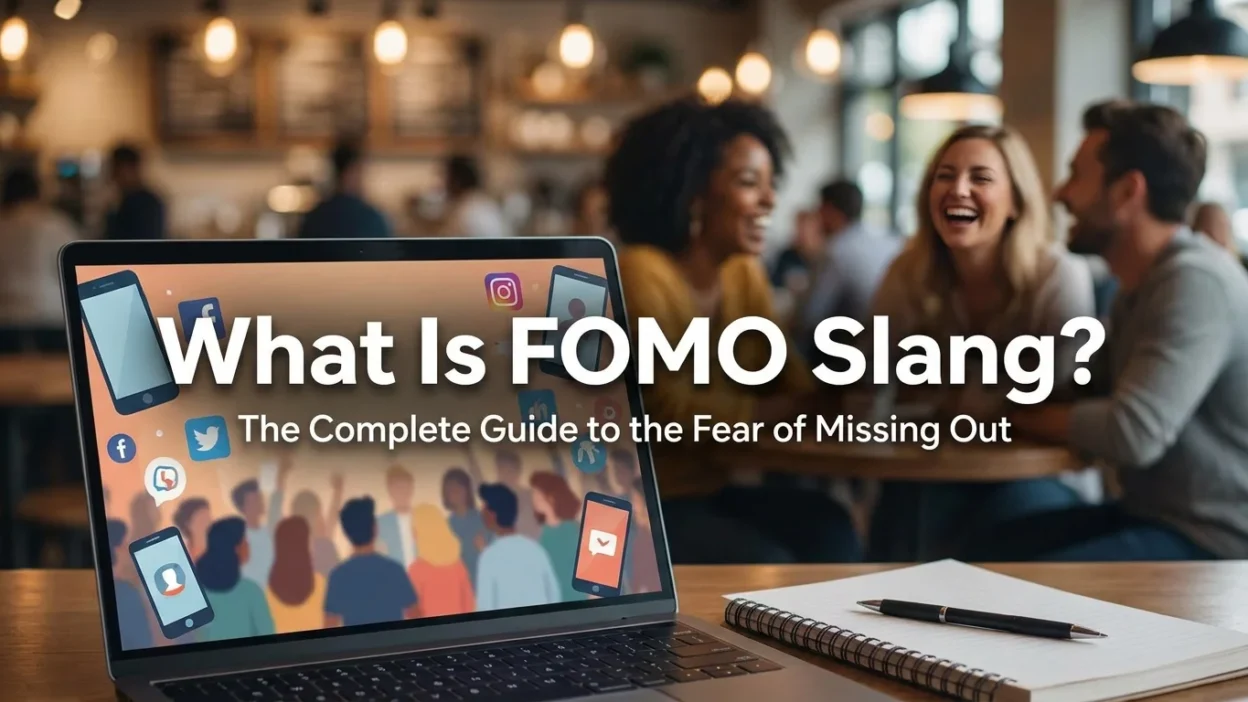
what is fomo slang stands for “Fear Of Missing Out.” It’s the anxious feeling that other people are having more fun, living better lives, or experiencing exciting things without you.
If you’ve ever scrolled through Instagram and felt a pang of jealousy seeing your friends at a party you weren’t invited to, you’ve experienced FOMO. It’s one of the most common feelings of the digital age, and it affects people of all ages.
Let’s break down everything you need to know about FOMO.
H2: What Does FOMO Mean in Slang?
FOMO is an acronym that stands for Fear Of Missing Out. It describes the anxiety or unease you feel when you think others are having rewarding experiences that you’re not part of.
H3: The Simple Definition
At its core, FOMO is:
- The worry that others are having fun without you
- The fear that you’re missing out on something important or exciting
- The feeling that everyone else is living a better life than you
H3: The Psychological Side
FOMO isn’t just about missing a party. It runs much deeper. People with FOMO often feel:
- Inadequate – like their lives aren’t good enough
- Left out – like they don’t belong
- Anxious – worried about what they’re missing
- Jealous – envious of others’ experiences
Social media makes FOMO worse. Platforms like Instagram, TikTok, and Snapchat show us curated highlights of other people’s lives. We compare our behind-the-scenes with their highlight reels. That comparison often leads to negative feelings.
Example: “I saw everyone’s vacation photos on Instagram and got serious FOMO.”
H2: Where Did FOMO Come From?
The term “FOMO” has a fairly recent origin. It reflects the anxiety of the modern, hyper-connected world.
H3: The Academic Origins
Marketing strategist Dan Herman first coined the term “Fear Of Missing Out” in 1996. He used it in a research paper about consumer behavior and social anxiety.
However, the term didn’t go mainstream until 2004. That’s when Patrick J. McGinnis, a student at Harvard Business School, wrote an op-ed for the school newspaper. He used the acronym “FOMO” to describe the anxiety that students felt while trying to choose between social activities.
Key Quote: “It’s the feeling that everyone else is having more fun, and you’re not.” — Patrick J. McGinnis
H3: How Social Media Made It Viral
Before social media, FOMO existed, but it was much smaller in scale. You might hear about a party from a friend or see a few photos. But now, with social media, you see:
- Live updates from events you weren’t invited to
- Vacation photos from people you barely know
- Success stories from your peers
- Perfect-looking relationships and meals and outfits
This constant stream of highlights creates a feeling that everyone else is living a better life. That feeling is FOMO.
By 2011, Oxford English Dictionary added “FOMO” as an official word. That’s how mainstream it had become.
H2: Common FOMO Situations
FOMO can strike in many different situations. Here are the most common ones.
H3: Social Events
This is the classic FOMO trigger. You see friends at a party, a concert, or a dinner, and you weren’t invited. Or you were invited but couldn’t go.
Example: “Everyone’s at the beach, and I’m stuck at work. Major FOMO.”
H3: Travel and Vacations
Seeing others’ travel photos can trigger intense FOMO. The Bahamas, Paris, or even just a weekend cabin trip.
Example: “My feed is full of people in Bali right now, and I’m losing my mind with FOMO.”
H3: Career Success
Seeing others get promotions, start businesses, or achieve career goals can make you feel like you’re falling behind.
Example: “She got the promotion I was hoping for. Now I’m feeling the FOMO hard.”
H3: Fashion and Trends
New trends go viral every day. When you see everyone wearing the same outfit or using the same product, you might feel pressured to join in.
Example: “Everyone’s wearing those new sneakers. I need to get a pair before the FOMO takes over.”
H3: Life Milestones
This one is bigger. Weddings, engagements, having children, buying houses. When others hit these milestones before you, it can create a deep sense of FOMO.
Example: “I’m 29 and single, but everyone I know is getting married. The FOMO is so real.”
H2: FOMO vs. JOMO
There’s an antidote to FOMO: JOMO. It stands for the Joy Of Missing Out.
H3: What Is JOMO?
JOMO is the happiness you feel when you choose to skip social events or online trends. It’s about being content with your own company. It’s about enjoying peace and quiet without worrying about what you’re missing.
H3: JOMO Examples
- Staying home in your pajamas and feeling great about it
- Turning off your phone notifications and not caring what you’re missing
- Unfollowing accounts that make you feel bad
- Saying “no” to plans without guilt
Example: “I skipped the party and binge-watched my favorite show. Total JOMO.”
H2: The Psychology of FOMO
Why do we feel FOMO? Here’s what psychologists say.
H3: Social Comparison Theory
We naturally compare ourselves to others. It’s human instinct. But social media makes this comparison constant and unrealistic. We compare our normal, messy lives to others’ curated, filtered, and edited posts.
H3: The Belonging Need
Humans have a basic need to belong. We want to be part of groups. FOMO feeds on this need. When we see others having fun together, our brains signal “danger” and tell us to get back in the group.
H3: Dopamine and Reward
Social media gives us small hits of dopamine when we see notifications or likes. It’s the same reward system that makes us want to keep checking our phones. FOMO is the anxiety that we might miss something rewarding.
H2: How FOMO Affects Mental Health
FOMO isn’t just a minor inconvenience. It can seriously impact your well-being.
H3: Anxiety and Stress
Constant worry about what you’re missing creates low-grade chronic stress. It can make you feel tired, tense, and irritable.
H3: Depression
Comparing your life to others can lead to negative thinking. You might feel like your life isn’t good enough. Over time, this can contribute to depression.
H3: Lower Self-Esteem
When everyone else seems to be having a better time, it’s easy to feel like something’s wrong with you. FOMO lowers your self-worth.
H3: Sleep Problems
Scrolling through social media late at night triggers FOMO. It also keeps your brain alert and wired. This makes it harder to fall asleep.
H2: How to Overcome FOMO
FOMO is a normal feeling. But it doesn’t have to control you. Here are practical tips.
H3: Limit Social Media Time
Set screen time limits. Remove apps from your home screen. Check once or twice a day instead of every few minutes.
H3: Unfollow Unhealthy Accounts
If certain accounts make you feel bad, unfollow them. You don’t need to see content that triggers your anxiety.
H3: Practice Gratitude
Focus on what you have instead of what you’re missing. Write down three good things about your day. It trains your brain to notice the positive.
H3: Be Present
When you’re with friends, put your phone down. Focus on the people you’re with. Worry about what you’re actually doing right now.
H3: Remember: You Only See Highlights
Social media posts are not reality. They’re edited, filtered, and curated. No one posts their bad days. Keep that perspective.
H3: Cultivate JOMO
Practice saying “yes” to yourself. Spend quality time alone. Enjoy your own company without guilt. The joy of missing out is real.
H2: How to Use FOMO in a Sentence
Here are some real-world examples.
- “I’m getting major FOMO from all these party pics.”
- “Honestly, the FOMO is so real right now.”
- “Are you going to the concert tonight? I’m having serious FOMO.”
- “I saw you guys at the beach. FOMO.”
- “She just posted a video from the Maldives. The FOMO 😭”
- “Y’all need to stop going on vacation. My FOMO can’t handle this.”
- “Okay, I need to stop scrolling before the FOMO gets worse.”
- “I’m catching up on sleep instead of going out. No FOMO tonight.”
H2: Similar Slang Terms
SlangMeaningFOMOFear Of Missing OutJOMOJoy Of Missing OutFOBOFear Of Better OptionsYOLOYou Only Live OnceBOPWorrying about your digital appearance
H2: FAQs (5 Questions, Answered in 2-3 Lines)
H3: What does FOMO stand for?
FOMO stands for Fear Of Missing Out. It’s the anxious feeling that others are having rewarding experiences that you’re not part of.
H3: Is FOMO a real thing?
Yes. Psychologists recognize FOMO as a genuine form of social anxiety. It affects mental health and well-being.
H3: What is the opposite of FOMO?
JOMO stands for Joy Of Missing Out. It’s the happiness you feel when you choose to skip social events and online trends.
H3: What triggers FOMO?
Social media triggers FOMO. Seeing photos and videos of friends at events, on vacation, or achieving milestones can trigger the feeling.
H3: Can FOMO affect mental health?
Yes. FOMO can lead to anxiety, depression, lower self-esteem, and sleep problems. It’s more than just a passing feeling.
H2: Final Thoughts
FOMO is the anxiety of the digital age. It’s the fear that others are living better, happier, and more exciting lives than you. Social media fuels it by showing us curated highlights of other people’s lives.But here’s the truth: no one posts their bad days.
The key is not to eliminate FOMO completely. That’s impossible. But you can manage it. Limit your social media time. Practice gratitude. Focus on your own life. And remember that true connection doesn’t come from likes and comments.
So next time the FOMO creeps in, take a breath. You’re not missing out as much as you think. And sometimes, the joy of missing out is exactly what you nee

Kenneth Green is a writer at Namevity who shares creative ideas for game names, team names, and unique names. He focuses on helping readers find memorable and inspiring names for their profiles, teams, and projects.