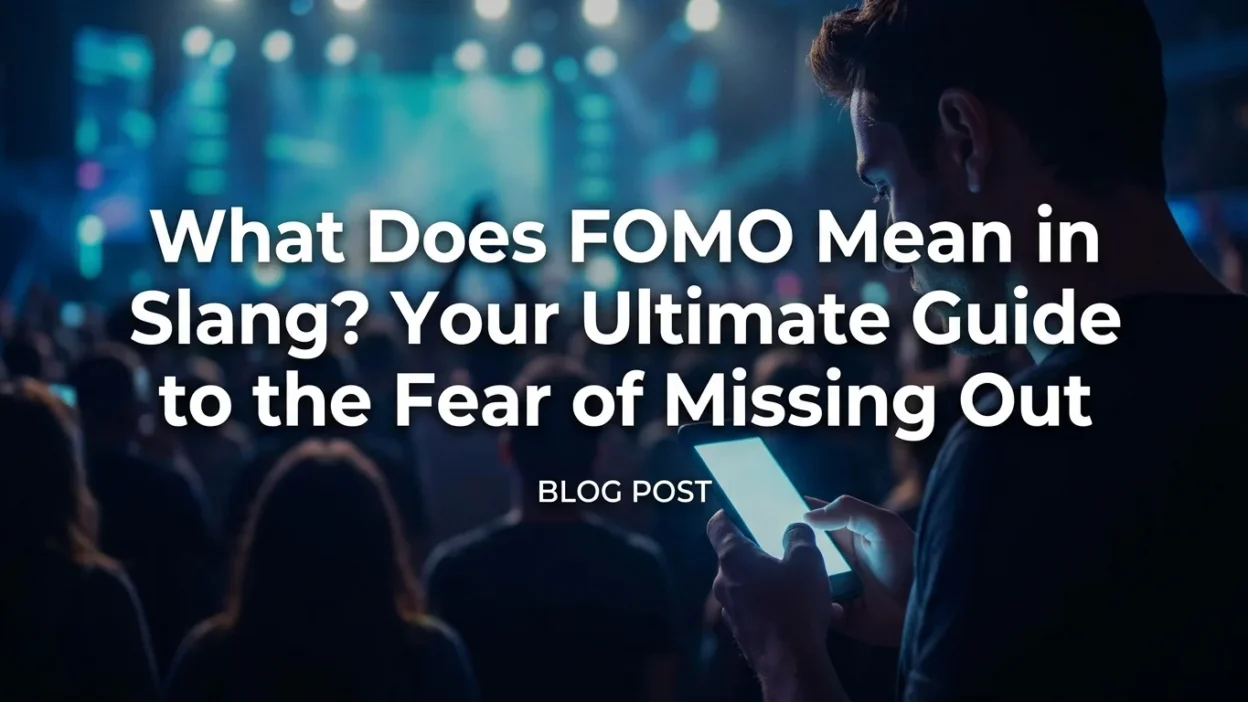
what does fomo mean in slang have you ever felt that nagging anxiety while scrolling through Instagram? You see your friends at a party. They’re laughing. They’re having fun. You’re at home in your pajamas. That feeling? That’s FOMO.
It’s everywhere these days. You hear it in conversations. You see it in memes. It’s used in marketing campaigns. It’s even a topic in psychology classes. FOMO isn’t just a random acronym. It’s a real emotional experience. And it affects people of all ages.
But what exactly is FOMO? How did it become such a big deal? And more importantly, how can you deal with it? This guide will answer all those questions. We’ll break down everything you need to know about this modern slang term.
So, let’s dive in. We’ll keep it real. We’ll keep it simple. By the end, you’ll understand FOMO completely. You might even learn how to beat it.
H2: What Does FOMO Mean in Slang?
Let’s get straight to the point. What does FOMO mean in slang? It means the Fear of Missing Out.
It’s that uneasy feeling you get. You feel like others are having rewarding experiences. And you’re not part of them. It’s a feeling of social anxiety. It’s driven by the belief that everyone else is having more fun than you.
The Simple Definition
FOMO is the anxiety that an exciting or interesting event may currently be happening elsewhere. It’s the feeling that you’re missing out on something amazing. This feeling often arises from social media posts. You see photos and videos of friends hanging out. You see them traveling, eating great food, or celebrating. And you think, “I should be there too.”
The More Detailed Definition
FOMO is more than just a fleeting thought. It’s a persistent worry. It can make you feel left out or excluded. It can lead you to constantly check your phone. You might refresh your social media feeds obsessively. You don’t want to miss a single update.
In short, FOMO is:
- Anxiety: It causes stress and worry.
- Social: It relates to your social connections and status.
- Driven by Comparison: You compare your life to others.
- Pervasive: It can happen to anyone, anywhere.
FOMO Meaning in Text and Online
In texts and online comments, people use “FOMO” as a shorthand. They use it to express regret. They use it to show they feel left out.
Example in a text:
- Friend 1: “Having the best time at the beach! ☀️”
- Friend 2: “I’m stuck at work. Major FOMO right now.”
Example in a comment:
- “Wish I was there! The FOMO is real.”
These examples show how common the term is. It’s a quick way to say, “I feel bad that I’m not there.”
H2: Where Did FOMO Come From? (Origins & History)
FOMO didn’t always exist as a word. But the feeling has been around for a long time. Let’s explore the history.
The Coining of the Term
The term “FOMO” was coined in 2004 by Dr. Dan Herman. He’s a marketing strategist . He was writing a paper about consumer behavior. He wanted to describe a specific feeling. It was the feeling of being left out of experiences that others are having.
Herman used the acronym “FOMO” to describe this phenomenon. It quickly caught on. It was a perfect word for a modern feeling.
The Social Media Explosion
Social media is what made FOMO a cultural phenomenon. Platforms like Facebook, Instagram, and Snapchat made it easy to see what everyone else was doing. Before social media, you might not know what your friends were up to. You could only compare yourself to people you actually saw. But social media changed everything.
Suddenly, you could see your friends’ highlight reels. This constant stream of information created a constant stream of comparison. And that’s where FOMO thrives.
The Rise of the Term in Pop Culture
By the 2010s, FOMO was everywhere.In 2013, the word “FOMO” was even added to the Oxford English Dictionary . This was a big moment. It proved that FOMO wasn’t just a passing fad. It was a permanent part of the English language.
H2: Why Do We Experience FOMO?
FOMO isn’t just a made-up feeling. It has psychological roots. Understanding why we experience it can help us manage it.
1. The Fear of Social Exclusion
Humans are social creatures. We have a deep need to belong. Being part of a group was essential for survival in ancient times. Being excluded meant danger. This hardwired fear still affects us today. When we feel left out, our brain treats it as a threat . FOMO is a modern expression of this ancient fear.
2. Social Comparison Theory
We compare ourselves to others. This is a natural human behavior. It helps us understand our place in the world. But social media makes this comparison constant. You’re not just comparing yourself to one person. You’re comparing yourself to everyone. This can lead to feelings of inadequacy. It can make you feel like your life isn’t as good as others.
3. The Dopamine Hit
Social media is designed to be addictive. Notifications and likes trigger a release of dopamine. Dopamine is a feel-good chemical in the brain . This creates a reward loop. FOMO drives this loop. You keep checking because you don’t want to miss out on that reward.
4. The Fear of Regret
FOMO is also about future regret. You worry that if you don’t participate, you’ll regret it later. You might think, “If I don’t go to this party, I’ll miss an amazing story.” This fear of future disappointment drives you to say yes to everything. It can lead to burnout and exhaustion.
H2: How to Use FOMO in a Sentence (with 6 Real Examples)
The best way to understand slang is to see it in action. Here are some real-life examples. They show how people use FOMO in different situations.
Example 1: The Classic FOMO
- Friend 1: “We’re all going to the concert tonight. Are you coming?”
- You: “I can’t. I have to study. But I’m already having FOMO.”
Here, you’re expressing regret. You feel anxious about missing the fun.
Example 2: FOMO in a Group Chat
- Friend 1: “This food is amazing! 😋”
- Friend 2: “Stop posting! You’re giving me FOMO.”
- You: “Seriously, I wish I was there.”
This is a playful way to say you feel left out. It’s common in group chats.
Example 3: FOMO in Investing
- Investor: “Bitcoin is going up so fast. I might buy some.”
- Friend: “Don’t buy because of FOMO. That’s how people lose money.”
Here, FOMO is used in a financial context. It refers to the fear of missing out on profits.
Example 4: Post-Event FOMO
- You: “I just saw your Instagram story. It looked like so much fun!”
- Friend: “It was amazing! You should have come.”
- You: “I know. The FOMO is real.”
This is FOMO after the fact. You saw the highlights and regret not being there.
Example 5: FOMO in Gaming
- Gamer: “Everyone is playing the new game. I need to buy it.”
- Friend: “Don’t buy it just because of FOMO. Wait for reviews.”
FOMO is common in the gaming world. People buy games just to be part of the conversation.
Example 6: FOMO About an Event
- Coworker: “The office party is next week.”
- You: “I might not go. I have a lot of work.”
- Coworker: “You’ll miss out! Don’t let FOMO get you.”
This shows how FOMO can influence decisions. Sometimes you do things just to avoid feeling left out.
H2: The Difference Between FOMO and JOMO
There’s an opposite to FOMO. It’s called JOMO. JOMO stands for the “Joy of Missing Out.”
What Is JOMO?
JOMO is the opposite feeling. Instead of anxiety, you feel peace. You’re happy to disconnect. You enjoy being present in your own life. You don’t care what others are doing . It’s a healthy and freeing mindset.
How JOMO Helps
JOMO helps you:
- Focus on What Matters: You pay attention to your own needs.
- Reduce Anxiety: You stop comparing yourself to others.
- Enjoy the Present: You savor your current experience.
- Set Boundaries: You learn to say no without guilt.
FOMO vs. JOMO
Here’s a quick comparison:
FOMO (Fear of Missing Out)JOMO (Joy of Missing Out)Anxiety-drivenPeace-drivenConstant comparisonContent with yourselfScrolling social mediaDisconnecting from social mediaSaying yes to everythingSaying no with confidenceFeeling left outFeeling free
In short, JOMO is the goal. It’s the healthy alternative to the stress of FOMO.
H2: How FOMO Affects Different Areas of Life
FOMO isn’t just a social media thing. It affects many parts of your life. Let’s explore how.
1. Social Life
FOMO makes you feel pressured to attend every event. All because you don’t want to miss out. This can lead to social burnout. You might even neglect your own needs.
2. Mental Health
FOMO is linked to mental health issues. Studies show it can cause:
- Anxiety: Constant worry about being left out.
- Depression: Feeling inadequate compared to others.
- Low Self-Esteem: Thinking your life isn’t good enough.
- Stress: Always feeling like you need to be “in the know.”
3. Finances
FOMO can hurt your wallet. You might buy things you don’t need. Why? Because everyone else has them. This is especially true in investing. People buy stocks or crypto because they fear missing out on gains. This often leads to buying high and selling low. It’s a classic mistake.
4. Relationships
FOMO can damage relationships. You might be physically present but mentally absent. You’re always on your phone. You’re checking what others are doing. This makes your friends and family feel unimportant.
H2: How to Overcome FOMO (Practical Tips)
The good news is that you can manage FOMO. It’s not a permanent condition. Here are some practical tips to help you beat the fear.
1. Limit Social Media Use
This is the most important step. Social media is the main driver of FOMO. Set limits for yourself. Use app timers. Uninstall social apps from your phone. Try a digital detox. Even a few days away can make a big difference.
2. Practice Mindfulness
Be present in the moment. Focus on what you’re doing right now. Don’t worry about what others are doing. Mindfulness exercises like meditation can help. They train your brain to stay in the present.
3. Keep a Gratitude Journal
Write down what you’re grateful for. This shifts your focus. Instead of thinking about what you’re missing, you think about what you have. It’s a powerful way to combat FOMO.
4. Set Boundaries
Learn to say no. You don’t have to attend every event. You don’t have to respond to every message. It’s okay to prioritize your own needs. Saying no is a form of self-care.
5. Focus on Real Connections
Spend time with people in person. Have real conversations. Phone-free dinners are great. Deep connections are more fulfilling than social media likes.
6. Stop Comparing
Remember that social media is a highlight reel. People post their best moments. They don’t post their struggles. Don’t compare your behind-the-scenes to someone else’s highlight reel.
7. Turn FOMO into JOMO
Embrace the joy of missing out. See it as a positive thing. You’re choosing to focus on your own life. You’re choosing peace over anxiety.
H2: FOMO in Popular Culture
FOMO has become a huge part of modern culture. You see it everywhere.
In Music
Many popular songs talk about FOMO. Artists sing about the fear of missing out on love, fun, and success. The term itself has been used in song titles.
In Movies and TV
TV shows often explore the theme of FOMO. Characters feel left out. They make bad decisions because of it. It’s a relatable topic for audiences.
In Marketing
Companies use FOMO to sell products. They say things like “Limited time offer!” or “Only a few left in stock!” This creates urgency. It makes you feel like you’ll miss out if you don’t buy. This is called “FOMO marketing.”
In Memes and Social Media
FOMO is a staple of internet humor. There are countless memes about it. They show people feeling left out. They make fun of the feeling. It’s a way for people to laugh about a shared experience.
H2: FAQs About FOMO
What does FOMO stand for?
FOMO stands for “Fear of Missing Out.” It’s the anxious feeling that others are having fun or success without you.
Is FOMO a real psychological condition?
FOMO is not a clinical diagnosis. But it is a recognized psychological phenomenon. It can cause real stress and anxiety. Studies have shown it can negatively affect mental health.
How is FOMO different from FOMU?
FOMU stands for “Fear of Messing Up.” It’s the fear of making a mistake. This is different from FOMO, which is about missing out on experiences. FOMU is more about performance anxiety.
How do I stop FOMO?
You can stop FOMO by limiting social media use, practicing mindfulness, keeping a gratitude journal, and focusing on real-life connections. Remember, social media shows highlight reels, not real life.
Is FOMO bad?
FOMO can be bad for your mental health. It causes anxiety, stress, and low self-esteem. It can also lead to poor financial decisions. However, a little FOMO can be motivating. It can push you to try new things. The key is balance.
Conclusion: Understanding and Managing FOMO
FOMO is more than just a slang term. It’s a real feeling. It’s a product of our modern, hyper-connected world. Social media has made it easier than ever to compare ourselves to others. This constant comparison fuels anxiety and stress.
But understanding FOMO is the first step to beating it. Now you know what it means. You know where it came from. You know how it affects your life. And most importantly, you know how to manage it.Here’s the bottom line: Your life is your own. thing. It’s okay to miss out sometimes. In fact, it can be a relief.
Embrace JOMO. Enjoy the joy of missing out. Disconnect from social media. Connect with real people. Focus on what truly matters to you. You’ll be happier. You’ll be less stressed. And you’ll be in control of your own life.
So, next time you feel that familiar FOMO creeping in, remember this guide. Take a deep breath. Put down your phone. Live your own life. That’s the real cure.

Kenneth Green is a writer at Namevity who shares creative ideas for game names, team names, and unique names. He focuses on helping readers find memorable and inspiring names for their profiles, teams, and projects.