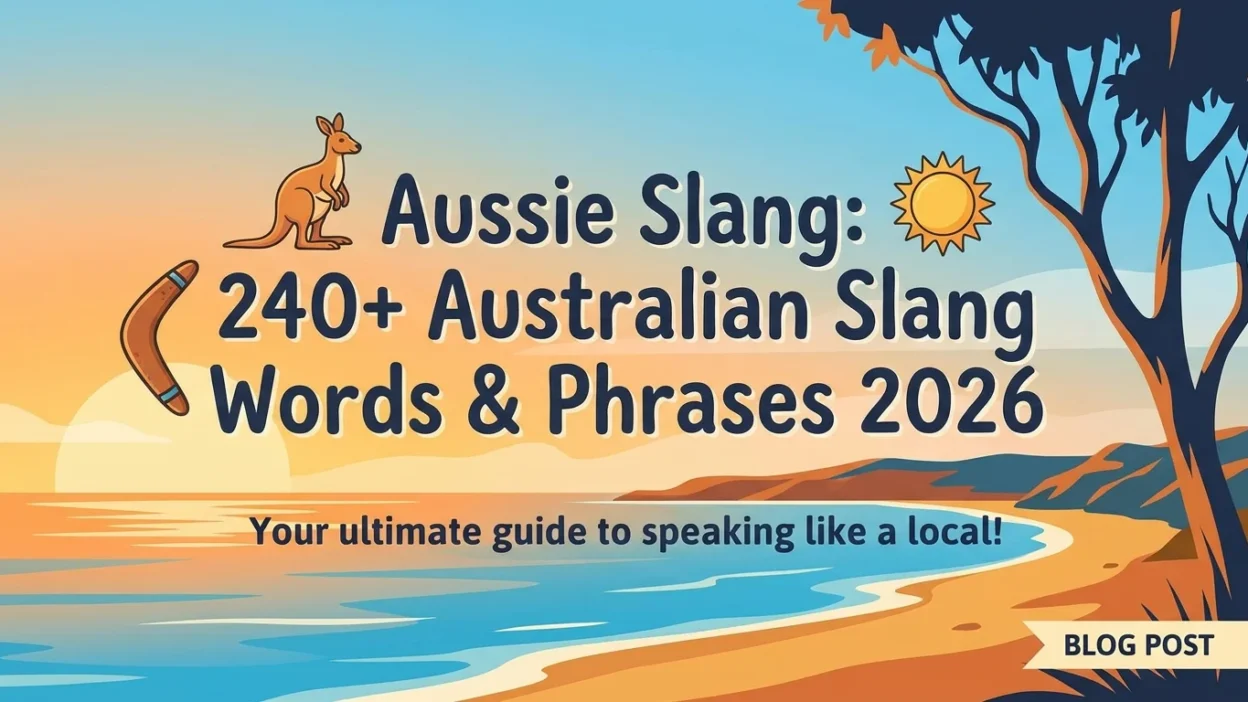
Have you ever heard an Australian say “G’day mate”? Or maybe you have heard someone call a friend a “legend”? Australian slang is famous all over the world. It is colorful, funny, and sometimes confusing.
Aussies love to shorten words. They also love to add “o” or “ie” to the end of everything. This makes their language unique. It reflects their relaxed and friendly culture.
This guide breaks it all down. You will learn the essentials. You will see real examples. And you will sound like a true blue Aussie in no time. Let’s dive in. 🇦🇺🦘
H2: What Makes Aussie Slang Unique?
Australian English is something special. It is a mix of British, American, and Indigenous influences. However, it has its own unique flavor.
Aussies love to shorten words. For example, “afternoon” becomes “arvo.” “Breakfast” becomes “brekkie.” It makes the language faster and more casual.
They also use rhyming slang sometimes. It is similar to Cockney rhyming slang. For instance, “Captain Cook” means “look.”
Another unique feature is the use of “mate.” This is a friendly term. You can use it for anyone. It shows you are on good terms.
H2: Essential Aussie Slang Words
G’day 👋
This is the most famous Australian greeting. It means “hello.” It is short for “good day.”
Example: “G’day mate. How are you going?”
Arvo ☀️
This means “afternoon.” It is a classic example of Aussie word shortening.
Example: “I will see you this arvo.”
Brekkie 🍳
This means “breakfast.” It is another shortened word.
Example: “Let’s grab some brekkie before work.”
Barbie 🍔
This means “barbecue.” It is a popular way to cook and socialize.
Example: “We are having a barbie on Saturday. Bring some snags.”
Snags 🌭
These are sausages. You often cook them on the barbie.
Example: “Throw another snag on the barbie.”
Mate 👬
This is a friendly term. It means “friend” or “pal.” You can use it for anyone.
Example: “Thanks a lot, mate.”
No Worries ✌️
This means “you are welcome” or “it is fine.” It reflects the laid-back Aussie attitude.
Example: “Thanks for your help.” “No worries.”
Fair Dinkum 🤠
This means “genuine” or “true.” It is used to show honesty.
Example: “Is that fair dinkum?” “Yes, it is true.”
H2: More Common Aussie Slang
Bikkie 🍪
This means “biscuit” or “cookie.” It is often used in the phrase “the bikkies have crumbled.”
Example: “I will have a bikkie with my tea.”
Bogan 🧔
This is a term for an uncultured or unsophisticated person. It is similar to “redneck” in America.
Example: “He is a bit of a bogan.”
Bottle-O 🍾
This is a bottle shop. It is a place where you buy alcohol.
Example: “I need to stop at the bottle-o.”
Chook 🐔
This means “chicken.” It is a common word for the bird.
Example: “We are having roast chook for dinner.”
Dunny 🚽
This is an old-fashioned term for “toilet.” Many people still use it today.
Example: “Where is the dunny?”
Esky 🧊
This is a cooler. You use it to keep drinks cold.
Example: “Grab the esky for the beach trip.”
Footy 🏉
This is a term for football. It can mean Australian rules football or rugby league.
Example: “Are you watching the footy tonight?”
Maccas 🍟
This is slang for McDonald’s. It is used all over Australia.
Example: “Let’s grab some Maccas for lunch.”
Roo 🦘
This is a kangaroo. It is an iconic Australian animal.
Example: “Look at that big roo over there.”
Servo ⛽
This means “service station” or “gas station.” It is where you buy fuel.
Example: “I need to fill up the car at the servo.”
Thongs 👡
In Australia, thongs are flip-flops. They are not underwear.
Example: “I am wearing my thongs to the beach.”
H2: Aussie Phrases and Expressions
How You Going? 🤔
This means “how are you?” It is a common greeting.
Example: “G’day mate. How you going?”
She’ll Be Right 👍
This means “everything will be okay.” It reflects the relaxed Aussie attitude.
Example: “The car is making a weird noise.” “She’ll be right.”
Flat Out 😤
This means “very busy” or “working hard.”
Example: “I have been flat out all week.”
Raining Cats and Dogs 🌧️
This means it is raining heavily. It is used in many English-speaking countries.
Example: “It is raining cats and dogs out there.”
Pretty Good 👍
This means “quite good” or “fine.” It is a common answer to “how are you?”
Example: “How are you feeling?” “Pretty good.”
H2: Aussie Slang for People
Bloke 👨
This means a man. It is a common term.
Example: “He is a good bloke.”
Sheila 👩
This is a woman. It is an older term. But people still use it sometimes.
Example: “She is a lovely sheila.”
Little Ripper 🤩
This means someone who is excellent. It is a term of approval.
Example: “You are a little ripper.”
Legend 🏆
This means someone who is cool or impressive. It is a high compliment.
Example: “You helped me move house. You’re a legend.”
Battler 💪
This means someone who works hard. They might be struggling but they keep going.
Example: “He is a real battler.”
H2: Aussie Slang for Reactions
Oi! 📢
This is used to get someone’s attention. It can also be used as a greeting.
Example: “Oi! Come over here.”
You Reckon? 🤔
This means “do you think so?” or “are you sure?” It is a common question.
Example: “It is going to rain today.” “You reckon?”
Crickey! 😲
Steve Irwin made this phrase famous. It shows surprise or excitement.
Example: “Crickey! Look at that snake.”
Bugger! 😩
This shows frustration or disappointment. It is a mild swear word.
Example: “Bugger! I missed the bus.”
Bloody Hell! 😱
This is an exclamation of surprise or frustration. It is common in British and Australian English.
Example: “Bloody hell! That was close.”
H3: FAQs About Aussie Slang
What does “arvo” mean?
It means “afternoon.” Australians love to shorten words.
What does “barbie” mean?
It means “barbecue.” It is a popular way to cook and socialize.
What does “fair dinkum” mean?
It means “genuine” or “true.” It is used to show honesty.
What are “snags”?
They are sausages. You often cook them on the barbie.
What does “no worries” mean?
It means “you are welcome” or “it is fine.” It reflects the laid-back Aussie attitude.
What is a “bogan”?
It is an uncultured or unsophisticated person. It is similar to “redneck.”
What does “she’ll be right” mean?
It means “everything will be okay.” It reflects the relaxed Aussie attitude.
What are “thongs” in Australia?
They are flip-flops. They are not underwear.
What does “flat out” mean?
It means “very busy” or “working hard.”
H2: Conclusion
So there you have it. Aussie slang is colorful, fun, and full of personality. It reflects the relaxed and friendly culture of Australia.
From “G’day” to “no worries,” these words define the Aussie way of life. They are used every day in conversations. The slang makes Australia feel unique and special.
Here is a quick recap:
- G’day = Hello.
- Arvo = Afternoon.
- Barbie = Barbecue.
- Snags = Sausages.
- Mate = Friend or pal.
- No worries = You are welcome.
- Fair dinkum = Genuine or true.
- Bogan = Uncultured person.
- Flat out = Very busy.
- She’ll be right = Everything will be okay.
Now you can sound like a true blue Aussie. Use these words with friends. They will be impressed. And remember, no worries mate! 🇦🇺🦘

Kenneth Green is a writer at Namevity who shares creative ideas for game names, team names, and unique names. He focuses on helping readers find memorable and inspiring names for their profiles, teams, and projects.