Slavic names carry the weight of centuries of history, mythology, and cultural pride. Originating from the Slavic languages, these names are most common in countries like Russia, Poland, Ukraine, Belarus, Bulgaria, Serbia, Croatia, Czech Republic, Slovakia, and Slovenia. The Slavic language family is a rich tapestry of Eastern European cultures, and its names reflect a deep connection to nature, strength, and spiritual values.
In 2026, Slavic names continue to captivate parents around the world. Names like Ivan, Luka, and Vladimir have become international favorites, while unique names like Zbigniew, Mstislav, and Božidar offer distinctive choices with profound meanings. Whether you have Slavic heritage or simply admire the beauty of the language, a Slavic name is a powerful way to honor tradition while giving your child a name with depth and character.
🇷🇺 Best Slavic Names – Top Picks
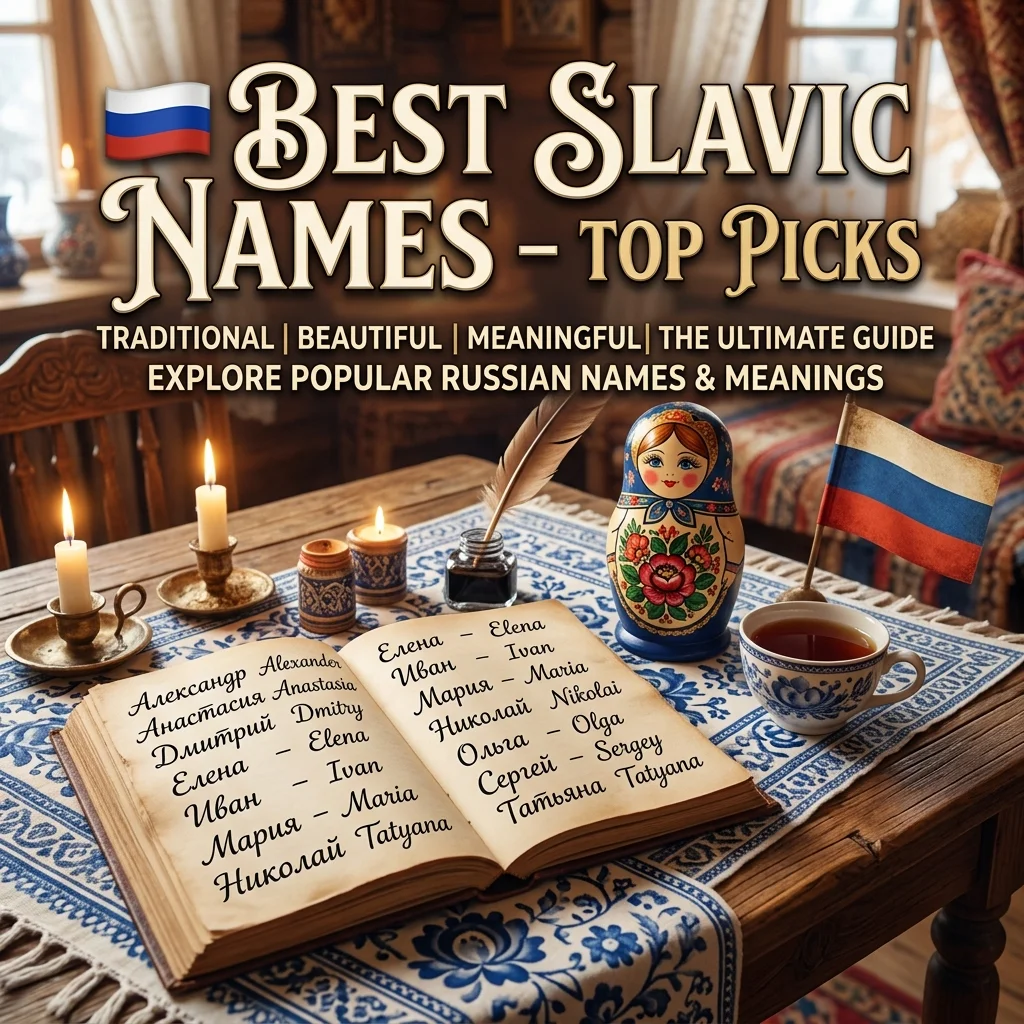
These names are universally loved and work beautifully across cultures. They balance tradition with modern appeal.
- 🇷🇺 Ivan – God is gracious (Russian form of John)
- 🇷🇺 Luka – From Lucania
- 🇷🇺 Milan – Eager, laborious, or coming together
- 🇷🇺 Vladimir – Renowned prince or ruler of peace
- 🇷🇺 Boris – Battle glory or small
- 🇷🇺 Casimir/Kazimierz – Famous destroyer (of peace)
- 🇷🇺 Stanisław – Standing strong in glory
- 🇷🇺 Jaroslav – Fierce and glorious
- 🇷🇺 Miroslav – Peace and glory
- 🇷🇺 Vladislav – Glorious rule
- 🇷🇺 Bogdan – God’s gift
- 🇷🇺 Natasha – Birthday of the Lord
- 🇷🇺 Ana – Grace
- 🇷🇺 Karol/Karolina – Free man
- 🇷🇺 Andrei – Manly (Russian form of Andrew)
- 🇷🇺 Yuri – Russian form of George
- 🇷🇺 Olga – Holy (from Old Norse Helga)
- 🇷🇺 Sasha – Diminutive of Alexander/Alexandra
- 🇷🇺 Misha – Diminutive of Michael
- 🇷🇺 Katya – Diminutive of Katherine
- 🇷🇺 Tatiana – Russian name meaning “fairy queen”
- 🇷🇺 Dimitri – Earth-lover (from Demeter)
- 🇷🇺 Nikolai – Victory of the people
- 🇷🇺 Sergei – Servant (from Roman Sergius)
- 🇷🇺 Alexei – Defender (from Alexander)
👑 Slavic Boy Names – Strong & Powerful
These names project strength, courage, and leadership. They are bold, masculine, and perfect for parents seeking a name with presence.
- 👑 Vladimir – Renowned prince or ruler of peace
- 👑 Vladislav – Glorious rule
- 👑 Jaroslav – Fierce and glorious
- 👑 Mstislav – Glorious vengeance
- 👑 Vsevolod – Ruler of everything
- 👑 Svyatoslav – Holy glory
- 👑 Bogdan – God’s gift
- 👑 Casimir – Famous destroyer (of peace)
- 👑 Stanislav – Standing strong in glory
- 👑 Boris – Battle glory
- 👑 Ladislav – Glorious ruler
- 👑 Milan – Eager or coming together
- 👑 Luka – From Lucania
- 👑 Ivan – God is gracious
- 👑 Andrei – Manly
- 👑 Dimitri – Earth-lover
- 👑 Nikolai – Victory of the people
- 👑 Sergei – Servant
- 👑 Alexei – Defender
- 👑 Yuri – Russian form of George
- 👑 Oleg – Holy (from Old Norse Helgi)
- 👑 Yaropolk – Fierce host
- 👑 Ratibor – War fighter
- 👑 Radomir – Happy peace
- 👑 Dobromir – Good peace
🌸 Slavic Girl Names – Beautiful & Feminine
These names combine elegance with strength. They are popular for their melodic sounds and profound meanings.
- 🌸 Natasha – Birthday of the Lord
- 🌸 Ana – Grace
- 🌸 Olga – Holy (from Old Norse Helga)
- 🌸 Karolina – Free woman
- 🌸 Ivana – Feminine of Ivan
- 🌸 Yelena – Light (Russian form of Helen)
- 🌸 Mila – Gracious, dear
- 🌸 Milena – Gracious, dear
- 🌸 Nadia/Nadezhda – Hope
- 🌸 Vera – Faith
- 🌸 Svetlana – Light
- 🌸 Tatiana – Fairy queen
- 🌸 Katya – Pure (diminutive of Katherine)
- 🌸 Anastasia – Resurrection
- 🌸 Ludmila – Dear to the people
- 🌸 Bożena – God’s gift
- 🌸 Dobroniega – Good joy
- 🌸 Jarmila – Spring dear
- 🌸 Radmila – Happy dear
- 🌸 Vesna – Spring
- 🌸 Zora – Dawn
- 🌸 Zlata – Golden
- 🌸 Jagoda – Berry
- 🌸 Snežana – Snow woman
- 🌸 Miluša – Kind
⚔️ Warrior & Strength Themed Slavic Names
For parents seeking names that embody courage, power, and fighting spirit.
- ⚔️ Wojciech – Joyous warrior
- ⚔️ Vojislav – Warrior glory
- ⚔️ Mścisław – Glorious vengeance
- ⚔️ Zbigniew – To dispel anger
- ⚔️ Borislav – Battle glory
- ⚔️ Radivoj – Happy warrior
- ⚔️ Milivoj – Dear warrior
- ⚔️ Branimir – To protect and peace
- ⚔️ Czesław – Honor and glory
- ⚔️ Dobrogniew – Good anger
- ⚔️ Mściwoj – Vengeful warrior
- ⚔️ Władysław – Ruler of glory
- ⚔️ Włodzimierz – Ruler of peace
- ⚔️ Kazimierz – Famous destroyer
- ⚔️ Sambor – Alone warrior
- ⚔️ Dalibor – Far battle
- ⚔️ Lutobor – Fierce battle
- ⚔️ Strogobor – Strict battle
- ⚔️ Wojbor – War fighter
- ⚔️ Vladivoj – Ruler warrior
- ⚔️ Vojnomir – Warrior peace
- ⚔️ Częstowoj – Frequent warrior
- ⚔️ Mstivoj – Vengeful warrior
- ⚔️ Vojkan – Warrior
- ⚔️ Srboje – Serbian warrior
🌿 Nature & Animal Themed Slavic Names
These names draw from the natural world, reflecting the Slavic reverence for nature.
- 🌿 Vuk – Wolf
- 🌿 Orel – Eagle
- 🌿 Jagoda – Berry
- 🌿 Kalina – Rowan tree
- 🌿 Vesna – Spring
- 🌿 Zora – Dawn
- 🌿 Zlata – Golden
- 🌿 Snežana – Snow woman
- 🌿 Jasna – Clear
- 🌿 Kveta – Flower
- 🌿 Baran – Ram
- 🌿 Szydło – Awl
- 🌿 Kąkol – Cockle
- 🌿 Broda – Beard, chin
- 🌿 Żyła – Vein
- 🌿 Uchacz – Ear-man
- 🌿 Łopata – Shovel
- 🌿 Żaba – Frog
- 🌿 Rus – Ruthenian/Russian man
- 🌿 Cich – Silent man
- 🌿 Orel – Eagle
- 🌿 Jesen – Autumn
- 🌿 Plamen – Fire
- 🌿 Goran – Highlander
- 🌿 Lasota – Forest man
🔥 Fire & Light Themed Slavic Names
These names evoke warmth, brightness, and the eternal flame of life.
- 🔥 Ognjen – Fire
- 🔥 Plamen – Fire
- 🔥 Jaroslav – Fierce and glorious
- 🔥 Jaromir – Fierce peace
- 🔥 Jaropełk – Fierce host
- 🔥 Yarovit – Slavic deity of war and fertility
- 🔥 Svetlana – Light
- 🔥 Zora – Dawn
- 🔥 Zvezdan – Star
- 🔥 Hviezdoslav – Star glory
- 🔥 Sunčica – Little sun
- 🔥 Danica – Morning star
- 🔥 Vatra – Fire (Croatian)
- 🔥 Svit – Light
- 🔥 Žarko – Warm, hot
- 🔥 Gorazd – Burn, spark
- 🔥 Kresimir – Spark of peace
- 🔥 Zorya – Dawn goddess
- 🔥 Yasen – Clear, serene
- 🔥 Belobog – White god
- 🔥 Crnobog – Black god
- 🔥 Svarog – God of fire
- 🔥 Perun – God of thunder
- 🔥 Dazhbog – Giving god
- 🔥 Radegast – Happy guest
🕊️ Peace & Love Themed Slavic Names
These names emphasize harmony, love, and gentleness.
- 🕊️ Miroslav – Peace and glory
- 🕊️ Vladimir – Ruler of peace
- 🕊️ Mirko – Peace
- 🕊️ Mila – Gracious, dear
- 🕊️ Milena – Gracious, dear
- 🕊️ Lubomir – Love and peace
- 🕊️ Ljubomir – Love and peace
- 🕊️ Ljubica – Little love
- 🕊️ Ljubo – Love
- 🕊️ Miłosz – Love
- 🕊️ Bogumił – God’s dear
- 🕊️ Radmila – Happy dear
- 🕊️ Dobromir – Good peace
- 🕊️ Dobromil – Good dear
- 🕊️ Kocham – I love (Polish)
- 🕊️ Luba – Love
- 🕊️ Lubor – Love of war
- 🕊️ Lubosław – Love and glory
- 🕊️ Mirosława – Peace and glory
- 🕊️ Sławomir – Glory and peace
- 🕊️ Zbigniew – To dispel anger
- 🕊️ Zbyhněv – To dispel anger
- 🕊️ Spytihněv – To dispel anger
- 🕊️ Vratislav – Return of glory
- 🕊️ Vítězslav – Victorious glory
🧙 Mythological & Ancient Slavic Names
These names come from ancient Slavic mythology, carrying the stories of gods, heroes, and legendary figures.
- 🧙 Perun – God of thunder and lightning
- 🧙 Svarog – God of fire and blacksmithing
- 🧙 Dazhbog – Sun god, giving god
- 🧙 Veles – God of earth, water, and the underworld
- 🧙 Lada – Goddess of love and beauty
- 🧙 Mokosh – Goddess of fertility and earth
- 🧙 Yarilo – God of spring and fertility
- 🧙 Stribog – God of wind
- 🧙 Radogost – Happy guest, god of hospitality
- 🧙 Radegast – Happy guest
- 🧙 Belobog – White god (good deity)
- 🧙 Crnobog – Black god (evil deity)
- 🧙 Troyan – Slavic deity
- 🧙 Perunek – Little Perun
- 🧙 Peruvit – Perun’s son
- 🧙 Šventaragis – Holy horn
- 🧙 Veleslava – Veles’s glory
- 🧙 Jarovit – Slavic deity of war and fertility
- 🧙 Zorya – Dawn goddess
- 🧙 Lech – Legendary founder of Poland
- 🧙 Czech – Legendary founder of Czech lands
- 🧙 Rus – Legendary founder of Rus’
- 🧙 Tristan – Celtic-Slavic legendary figure
- 🧙 Bogumil – God’s dear
- 🧙 Zbigniew – To dispel anger, legendary Polish name
👶 Russian Slavic Names – Classic & Timeless
These names come directly from Russian culture and history.
- 👶 Ivan – God is gracious
- 👶 Vladimir – Ruler of peace
- 👶 Yaroslav – Fierce and glorious
- 👶 Mstislav – Glorious vengeance
- 👶 Vsevolod – Ruler of everything
- 👶 Svyatoslav – Holy glory
- 👶 Boris – Battle glory
- 👶 Gleb – Heir of God
- 👶 Oleg – Holy
- 👶 Olga – Holy
- 👶 Yuri – George
- 👶 Dimitri – Earth-lover
- 👶 Nikolai – Victory of the people
- 👶 Sergei – Servant
- 👶 Alexei – Defender
- 👶 Andrei – Manly
- 👶 Tatiana – Fairy queen
- 👶 Anastasia – Resurrection
- 👶 Svetlana – Light
- 👶 Nadezhda – Hope
- 👶 Vera – Faith
- 👶 Ludmila – Dear to the people
- 👶 Yelena – Light
- 👶 Natasha – Birthday of the Lord
- 👶 Katya – Pure
🇵🇱 Polish Slavic Names – Bold & Traditional
Polish names are known for their distinctive sounds and deep historical roots.
- 🇵🇱 Stanisław – Standing strong in glory
- 🇵🇱 Władysław – Ruler of glory
- 🇵🇱 Kazimierz – Famous destroyer
- 🇵🇱 Zbigniew – To dispel anger
- 🇵🇱 Jarosław – Fierce and glorious
- 🇵🇱 Mirosław – Peace and glory
- 🇵🇱 Wojciech – Joyous warrior
- 🇵🇱 Czesław – Honor and glory
- 🇵🇱 Bolesław – Great glory
- 🇵🇱 Przemysław – Wise glory
- 🇵🇱 Radosław – Happy glory
- 🇵🇱 Wiesław – Great glory
- 🇵🇱 Zdzisław – To build glory
- 🇵🇱 Bronisław – Armor glory
- 🇵🇱 Dobrosław – Good glory
- 🇵🇱 Lechosław – Legendary Polish ruler
- 🇵🇱 Wieńczysław – Crown glory
- 🇵🇱 Bogdan – God’s gift
- 🇵🇱 Bożena – God’s gift
- 🇵🇱 Bogumił – God’s dear
- 🇵🇱 Sławomir – Glory and peace
- 🇵🇱 Grzegorz – Watchful
- 🇵🇱 Krzysztof – Bearer of Christ
- 🇵🇱 Maciej – Gift of God
- 🇵🇱 Tomasz – Twin
🇨🇿 Czech & Slovak Slavic Names
These names from the Czech Republic and Slovakia are known for their melodic sounds.
- 🇨🇿 Václav – More glory
- 🇨🇿 Vladislav – Glorious rule
- 🇨🇿 Přemysl – Stratagem, trick
- 🇨🇿 Vratislav – Return of glory
- 🇨🇿 Vítězslav – Victorious glory
- 🇨🇿 Čestmír – Honor and peace
- 🇨🇿 Vojtěch – Joyous warrior
- 🇨🇿 Boleslav – Great glory
- 🇨🇿 Miroslav – Peace and glory
- 🇨🇿 Jaroslav – Fierce glory
- 🇨🇿 Radomír – Happy peace
- 🇨🇿 Dalibor – Far battle
- 🇨🇿 Bořivoj – Brave warrior
- 🇨🇿 Zbyšek – To dispel anger
- 🇨🇿 Milada – Dear
- 🇨🇿 Ludmila – Dear to the people
- 🇨🇿 Božena – God’s gift
- 🇨🇿 Vlasta – Homeland, power
- 🇨🇿 Zdeňka – To build
- 🇨🇿 Květa – Flower
- 🇨🇿 Slavomír – Glory and peace
- 🇨🇿 Břetislav – To spread glory
- 🇨🇿 Soběslav – Glory to oneself
- 🇨🇿 Věroslav – Faith and glory
- 🇨🇿 Zbyšek – To dispel anger
🇷🇸 Serbian & Croatian Slavic Names
These names from the South Slavic region are known for their strength and beauty.
- 🇷🇸 Novak – New (Novak Djokovic)
- 🇷🇸 Milorad – Happy dear
- 🇷🇸 Radovan – Happy
- 🇷🇸 Milovan – Dear
- 🇷🇸 Miloš – Dear
- 🇷🇸 Milan – Eager
- 🇷🇸 Dragan – Precious
- 🇷🇸 Predrag – Very precious
- 🇷🇸 Nebojša – Fearless
- 🇷🇸 Dušan – Soul
- 🇷🇸 Vuk – Wolf
- 🇷🇸 Luka – From Lucania
- 🇷🇸 Jovan – John
- 🇷🇸 Stefan – Crown
- 🇷🇸 Nikola – Victory of the people
- 🇷🇸 Marko – Warrior
- 🇷🇸 Vladimir – Ruler of peace
- 🇷🇸 Vojislav – Warrior glory
- 🇷🇸 Slavoj – Glory
- 🇷🇸 Srboljub – Lover of Serbs
- 🇷🇸 Srbislav – Serbian glory
- 🇷🇸 Srbimir – Serbian peace
- 🇷🇸 Vlatko – Ruler
- 🇷🇸 Radoš – Happy
- 🇷🇸 Radivoj – Happy warrior
🇧🇬 Bulgarian Slavic Names
Bulgarian names often have unique characteristics and beautiful meanings.
- 🇧🇬 Bogdan – God’s gift
- 🇧🇬 Boris – Battle glory
- 🇧🇬 Vladimir – Ruler of peace
- 🇧🇬 Ognyan – Fiery
- 🇧🇬 Orlin – Eagle
- 🇧🇬 Yasen – Ash tree, clear, serene
- 🇧🇬 Radostin – Joy
- 🇧🇬 Veselin – Cheerful
- 🇧🇬 Krasimir – Beauty of peace
- 🇧🇬 Lyubomir – Love and peace
- 🇧🇬 Tsvetan – Flower
- 🇧🇬 Milen – Dear
- 🇧🇬 Ventsislav – Crown of glory
- 🇧🇬 Stanimir – Stand for peace
- 🇧🇬 Bozhidar – God’s gift
- 🇧🇬 Spasimir – Savior of peace
- 🇧🇬 Svetoslav – Holy glory
- 🇧🇬 Radoslav – Happy glory
- 🇧🇬 Zornitsa – Morning star
- 🇧🇬 Krasimira – Beauty of peace
- 🇧🇬 Lyubomira – Love and peace
- 🇧🇬 Snezhana – Snow woman
- 🇧🇬 Tsvetana – Flower
- 🇧🇬 Vesela – Cheerful
- 🇧🇬 Ralitsa – Larkspur flower
🇺🇦 Ukrainian Slavic Names
Ukrainian names often have their own distinct forms and pronunciations.
- 🇺🇦 Volodymyr – Ruler of peace
- 🇺🇦 Vladyslav – Glorious rule
- 🇺🇦 Yaroslav – Fierce and glorious
- 🇺🇦 Mstyslav – Glorious vengeance
- 🇺🇦 Vsevolod – Ruler of everything
- 🇺🇦 Bohdan – God’s gift
- 🇺🇦 Oleksandr – Defender of men
- 🇺🇦 Andriy – Manly
- 🇺🇦 Mykhailo – Who is like God
- 🇺🇦 Dmytro – Earth-lover
- 🇺🇦 Oleh – Holy
- 🇺🇦 Roman – Roman
- 🇺🇦 Pavlo – Small
- 🇺🇦 Ruslan – From Rus’
- 🇺🇦 Maksym – Greatest
- 🇺🇦 Artem – Unharmed, perfect health
- 🇺🇦 Oleksandra – Defender of women
- 🇺🇦 Oksana – Praise to God
- 🇺🇦 Olena – Light
- 🇺🇦 Kateryna – Pure
- 🇺🇦 Nataliya – Birthday
- 🇺🇦 Vira – Faith
- 🇺🇦 Nadiya – Hope
- 🇺🇦 Lyudmyla – Dear to the people
- 🇺🇦 Halyna – Calm
⛪ Religious & Saintly Slavic Names
Many Slavic names are associated with saints and religious figures.
- ⛪ Vladimir – Saint Vladimir, Grand Prince of Kyiv
- ⛪ Olga – Saint Olga, Princess of Kyiv
- ⛪ Boris – Saint Boris, martyr
- ⛪ Gleb – Saint Gleb, martyr
- ⛪ Stanisław – Saint Stanislaus of Kraków
- ⛪ Kazimierz – Saint Casimir of Poland
- ⛪ Wacław/Václav – Saint Wenceslaus of Bohemia
- ⛪ Władysław – Saint Ladislaus of Hungary
- ⛪ Wojciech – Saint Adalbert of Prague
- ⛪ Cyril – Saint Cyril, missionary
- ⛪ Methodius – Saint Methodius, missionary
- ⛪ Sava – Saint Sava of Serbia
- ⛪ Naum – Saint Naum of Ohrid
- ⛪ Clement – Saint Clement of Ohrid
- ⛪ Klim – Slavic form of Clement
- ⛪ Pantaleon – Saint Panteleimon
- ⛪ Paraskeva – Saint Paraskeva
- ⛪ Nonna – Saint Nonna of Nazianzus
- ⛪ Eupraxia – Saint Eupraxia
- ⛪ Pelagia – Saint Pelagia
- ⛪ Fet – Saint Fet
- ⛪ Stojan – Stand (faith)
- ⛪ Vera – Faith
- ⛪ Nadezhda – Hope
- ⛪ Lyubov – Love
🎨 Unique & Rare Slavic Names
For parents seeking something truly distinctive, these lesser-known Slavic names are beautiful and meaningful.
- 🎨 Biljana – Herb
- 🎨 Blagica – Gentle
- 🎨 Borisav – Battle savior
- 🎨 Bratoljub – Brother lover
- 🎨 Budimir – To be peace
- 🎨 Čedomir – Child of peace
- 🎨 Dobrivoje – Good warrior
- 🎨 Drago – Precious
- 🎨 Dragomir – Precious peace
- 🎨 Dragoslav – Precious glory
- 🎨 Dubravko – Oak grove
- 🎨 Gostimir – Guest peace
- 🎨 Hrvoje – Croatian
- 🎨 Kresimir – Spark of peace
- 🎨 Krunoslav – Crown of glory
- 🎨 Ladislav – Glorious ruler
- 🎨 Malina – Raspberry
- 🎨 Miodrag – Dear and precious
- 🎨 Nemanja – Without possession
- 🎨 Prvoslav – First glory
- 🎨 Rastko – Growth
- 🎨 Ratko – War
- 🎨 Snežka – Snowy
- 🎨 Srna – Doe (female deer)
- 🎨 Stanica – To stand
📚 Modern & Trendy Slavic Names
These names have seen a resurgence in popularity and are currently trending in 2026.
- 📚 Luka – From Lucania
- 📚 Milan – Eager
- 📚 Ivan – God is gracious
- 📚 Bogdan – God’s gift
- 📚 Jovan – John
- 📚 Karol – Free man
- 📚 Karolina – Free woman
- 📚 Andrei – Manly
- 📚 Natasha – Birthday of the Lord
- 📚 Ana – Grace
- 📚 Darko – Gift
- 📚 Drago – Precious
- 📚 Bane – Glorious defender
- 📚 Florian – Flower
- 📚 Miko – Beautiful child
- 📚 Yasha – Supplanter
- 📚 Yakov – Supplanter
- 📚 Sasha – Defender of men
- 📚 Misha – Who is like God
- 📚 Katya – Pure
- 📚 Dima – Earth-lover
- 📚 Kolya – Victory of the people
- 📚 Petya – Rock
- 📚 Vanya – God is gracious
- 📚 Mila – Dear
🔍 Meaning & Etymology of Slavic Names
Understanding the meaning of Slavic names reveals the values and aspirations of Slavic cultures.
Common Roots in Slavic Names
RootMeaningExamplesslavGlory, fameVladislav, Miroslav, StanislavmirPeace, worldVladimir, Miroslav, RadomirvladTo rule, rulerVladimir, Vladislav, VsevolodbogGod, richBogdan, Bogumil, BoženaradHappy, eagerRadosław, Radomir, RadovanmilLove, dearMilena, Miłosz, LudmilaborWar, fightBoris, Borislav, DaliborvojWarrior, soldierWojciech, Vojislav, RadivojgniewAnger, furiousZbigniew, Gniewomir, DobiegniewstanTo stand, becomeStanisław, StanimiryarStrong, fierceYaroslav, Jaromir, YaropolktechJoy, comfortWojciech, Ciechosław, BožetechbolGreat, moreBolesław, BolemirdomHouseDomarad, Domosław, DomagojmyslThinkPrzemysław, Gostomysl, RadomysłmstiVengeanceMstislav, MściwojostroSharpOstromir, Ostrogniew
📖 Slavic Name Structure: Dithematic Names Explained
Traditional Slavic names are often “dithematic,” meaning they are composed of two lexemes (word roots) that combine to form a meaningful whole. These names were not given randomly—they contained a wish for the newborn child, expressing the values that were important in early times.
For example, the name Władysław contains the prefix wład (to rule, ruler) and the suffix sław (fame, glory), meaning “glorious ruler” or “ruler of glory”. Similarly, Vladimir combines vlad (to rule) and mir (peace), meaning “ruler of peace” or “renowned prince”.
Feminine equivalents usually end in the vowel -a (e.g., Bogusław → Bogusława, Vladislav → Vladislava). The tradition of dithematic names reflects the Slavic emphasis on personal qualities, virtues, and aspirations rather than simply naming after gods or weapons.
🍼 Tips for Choosing the Perfect Slavic Name
Choosing a Slavic name is a meaningful decision that can honor heritage and create a unique identity.
🔹 Start with Meaning
Many Slavic names honor faith, family, or virtues. Consider what values you want your child’s name to represent, such as strength, wisdom, or peace. Names like Vladimir (ruler of peace), Miroslav (peace and glory), or Zbigniew (to dispel anger) carry powerful meanings.
🔹 Consider Pronunciation
Slavic names can be challenging for English speakers. Choose a name that you are comfortable explaining and that your child will be able to say clearly. Names like Luka, Ivan, and Boris are easy to pronounce internationally.
🔹 Think About Heritage
If you have Slavic ancestry, a name from that culture is a beautiful way to honor your roots. Consider names from the specific country of your heritage—Polish, Russian, Czech, Serbian, Ukrainian, etc.
🔹 Say It Aloud
Test the name with your surname to ensure it flows well. Consider potential nicknames and initials.
🔹 Look for Versatility
Some Slavic names work well internationally and are easy to spell. Others are more unique and distinctive. Decide which approach works best for your family.
🔹 Research the Story
Many Slavic names have rich historical and mythological associations. Understanding the story behind the name can add depth and meaning.
📜 History of Slavic Names – From Pagan to Christian
The history of Slavic names is a journey from pagan traditions to Christian influence.
Pre-Christian Traditions
In pre-Christian traditions, a child less than 7–10 years old would bear a “substitutional name,” the purpose of which was to deflect attention from the child and thereby protect it from evil powers. This practice was largely the result of the high mortality rate of young children at the time. A child who survived to 7–10 years was considered worthy of care and was granted adult status and a new adult name during a ritual first haircut. Substitutional names included names like Niemój (“not mine”) and Nielub (“not loved”).
Christian Influence
Traditional names remained dominant until the Slavic nations converted to Christianity. Since then, baptismal names came into use, which were given after the patron saint of the newly baptized. Even after that, the traditional names persisted in everyday use, while in religious matters the baptismal name was involved; thus, many persons had and used two names simultaneously.
For Catholic Slavs, the decisive event was the Council of Trent (1545–63), which decreed that every Catholic should have a Christian name instead of a native one. After this ban, the Polish nobility (especially Protestants) attempted to preserve traditional names like Zbigniew and Jarosław, but ordinary people tended to choose names solely from the Christian calendar, which contained only a handful of Slavic saints’ names.
Revival of Traditional Names
Since national revivals during the 19th and 20th centuries, traditional names, especially of historical rulers and heroes, regained popularity. For example, in Poland many forgotten names were resurrected such as Bronisław, Bolesław, Jarosław, Mirosław, Przemysław, and Zbigniew; and new ones were created such as Lechosław and Wieńczysław. Today, traditional Slavic names are accepted by the Christian Church and are given at a child’s baptism.
🌍 Slavic Names Around the World
Slavic names have spread far beyond Slavic countries and are now used around the world.
🇺🇸 United States
Slavic names like Luka, Ivan, Natasha, and Milan have gained popularity in the US. Luka is currently one of the fastest-rising names, following the success of its Italian cousin Luca.
🇬🇧 United Kingdom
Names like Anya, Katya, and Sasha are popular in the UK, often chosen for their exotic appeal and beautiful sounds.
🇦🇺 Australia
Slavic names are increasingly common in Australia, particularly among families with Eastern European heritage.
🌐 International Appeal
Names like Vladimir, Boris, and Olga are recognized worldwide due to historical figures, sports stars, and cultural icons. The global spread of Slavic names reflects the growing appreciation for Eastern European culture and heritage.
🏁 Conclusion
Choosing a Slavic name is a beautiful way to connect with the rich cultural heritage of Eastern Europe. From the strength of warriors like Vladimir and Vojislav to the gentleness of peace-bringers like Miroslav and Milena, Slavic names offer a wide range of meanings and sounds. Whether you have Slavic roots or simply appreciate the beauty of the language, there is a Slavic name for every family.
In 2026, Slavic names continue to captivate parents worldwide. With their deep meanings, mythological connections, and timeless appeal, they are names that will stand the test of time. Take your time, explore the options, and choose a name that will be a source of pride and identity for a lifetime.
❓ Frequently Asked Questions (FAQs)
🤔 What are the most popular Slavic boy names? 🇷🇺
The most popular Slavic boy names include Ivan, Luka, Vladimir, Boris, Stanisław, Casimir, Yaroslav, and Miroslav. Ivan is the Slavic form of John, while Luka is the Slavic form of Luke.
🌸 What are the most popular Slavic girl names? 🇷🇺
Popular Slavic girl names include Natasha, Ana, Olga, Karolina, Ivana, Mila, Milena, Nadezhda, Vera, and Svetlana. Many of these names have beautiful meanings like grace, hope, and dear.
🤔 What does “slav” mean in Slavic names? 📖
The root “slav” means glory or fame in Slavic languages. It appears in names like Vladislav (glorious rule), Miroslav (peace and glory), and Stanislav (standing in glory).
🤔 What does “mir” mean in Slavic names? 📖
The root “mir” means peace or world in Slavic languages. It appears in names like Vladimir (ruler of peace), Miroslav (peace and glory), and Radomir (happy peace).
🤔 What are some unique Slavic names? 🎨
Unique Slavic names include Biljana, Blagica, Bratoljub, Budimir, Čedomir, Dragomir, Hrvoje, Kresimir, Krunoslav, Miodrag, Nemanja, Prvoslav, and Rastko.
🤔 Are Slavic names religious? ⛪
Many Slavic names have religious associations, particularly those that entered the Christian calendar through saints. Examples include Vladimir, Olga, Boris, Gleb, Stanisław, Kazimierz, Wacław, and Wojciech.
🤔 What is a dithematic name? 📖
A dithematic name is a name composed of two word roots (lexemes). Traditional Slavic names were often dithematic, combining two meaningful elements such as vlad (to rule) and mir (peace) to create Vladimir, or slav (glory) and mir (peace) to create Miroslav.
🤔 Can I use a Slavic name if I’m not Slavic? 🌍
Yes, many Slavic names have become international and are used by families of all backgrounds. Names like Luka, Ivan, Natasha, and Milan are popular worldwide. However, it’s important to respect the cultural heritage of the name and understand its meaning and pronunciation.

Kenneth Green is a writer at Namevity who shares creative ideas for game names, team names, and unique names. He focuses on helping readers find memorable and inspiring names for their profiles, teams, and projects.